Ⅰ. Basic Programme Information
1. Programme Name: Design Engineering for Innovation Winter School
2. Official Link: https://www.imperial.ac.uk/continuing-professional-development/short-courses/winter-schools/winterschool/design-engineering-for-innovation-winter-school/
3. Programme Period: 3 February – 14 February 2025
4. Venue: Imperial College London, South Kensington Campus
5. Programme Highlights
5.1 Official certificate issued by Imperial College London upon completion
5.2 Official academic transcript provided by Imperial College London
5.3 Curriculum developed and delivered by the Dyson School of Design Engineering, Imperial College London
6. Programme Summary
Design Engineering for Innovation Winter School is an academic training programme hosted by Imperial College London for global students. It enables participants to engage with industry practitioners in design and innovation sectors, and address global challenges such as sustainable development and social impact. All lectures and practical sessions will be delivered on the South Kensington Campus of Imperial College London by the full academic team from the Dyson School of Design Engineering. Participants will experience authentic teaching delivered by world-class university faculty.
This programme greatly enhances applicants’ competitiveness for postgraduate and doctoral admission at home and abroad, as well as future career recruitment, delivering targeted academic background improvement for engineering students.
Ⅱ. Imperial College London
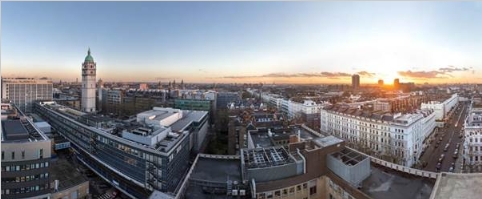
Ranked 2nd in the world and 1st in Europe in the QS World University Rankings 2025, Imperial College London consistently ranks among the world’s top-tier universities. Rooted in science and engineering, it enjoys an international reputation for outstanding teaching and research, attracting more than 22,000 students and 8,000 leading academic staff from over 126 countries.
Founded in 1907, Imperial College has delivered landmark contributions to society, including the discovery of penicillin, the development of holography, and foundational research into optical fibre technology. Today, its research continues to benefit humanity, with core focus areas covering cross-disciplinary collaboration for global health improvement, climate change mitigation, sustainable energy development, security risk resolution, advancement of data management and analytical technologies for data-driven research, and solving scientific challenges at the molecular scale.
Ⅲ. Dyson School of Design Engineering, Imperial College London
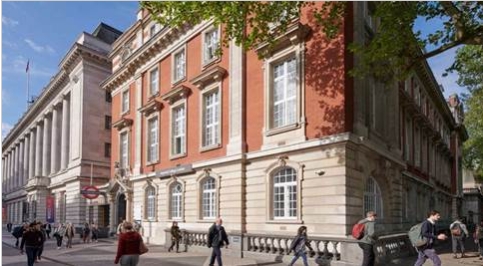
Established in 2014 with generous funding from the James Dyson Foundation, the Dyson School of Design Engineering is the tenth and newest engineering department at Imperial College London. Design engineering integrates design thinking with engineering knowledge and practice within an innovation and entrepreneurship framework, dedicated to tackling global challenges with particular emphasis on sustainability, entrepreneurship and societal impact.
Interdisciplinarity and cross-domain capabilities form the core competitive advantage of the Dyson School. Design engineers integrate diverse disciplines, methodologies and modes of thinking to resolve complex problems through multi-faceted approaches. Trained to think as both engineers and designers, students combine expertise in mathematics, psychology, policy-making and business, equipping them with unique capacity for innovation, responsible leadership and management of complexities inherent to product innovation and global grand challenges.
Design engineers act as innovative problem-solvers bridging conventional engineering and design to deliver creative solutions to modern challenges, ranging from improving passenger comfort in commercial aviation to developing next-generation prosthetics. As a highly creative discipline, design engineering draws expertise in manufacturing techniques, product development, technical design and rapid prototyping to bring innovative products to market and optimise existing goods and production workflows. Winter School participants will benefit from the Dyson School’s world-leading interdisciplinary research and teaching, networking opportunities with industry leaders in design and innovation, and hands-on prototyping facilities.
Ⅳ. Programme Overview
Design engineers are innovative problem-solvers bridging traditional engineering and design to generate creative solutions for contemporary challenges. A highly creative discipline, design engineering synthesises manufacturing, product development, technical design and rapid prototyping expertise to commercialise innovations and upgrade existing products and manufacturing processes.
This Winter School delivers in-depth knowledge of creativity and innovation through inspirational lectures and hands-on workshops. It introduces evolutionary, revolutionary and experimental methodologies for design-led innovation modules, covering data-centric artificial intelligence design, smart city development and more. These modules align with participants’ existing engineering training and offer fresh inspiration for innovative practice. Design Thinking sessions trace the evolution of core design workflows, analyse their practical strengths and limitations, and propose integrated holistic design processes. Participants will learn cutting-edge research findings on creativity frameworks empowered by artificial intelligence, alongside practical tools to boost creative capacity for academic and professional use.
Participants will gain tangible hands-on experience in team prototyping via interactive design activities, deepening their grasp of design thinking and bridging the gap between theoretical planning and physical deliverables. The programme also covers state-of-the-art human factors research in design, together with leadership, innovation and entrepreneurship modules centred on evolving interactions between innovators and systemic frameworks. It further explores the practical value of interactive design across fast-growing sectors including wellbeing-centred design and future innovation.
As emerging innovators, participants are encouraged to drive transformation rather than merely adapt to it. The Future Design lecture series covers future product development, human factors and global market expansion, prompting students to evaluate the long-term societal impact of their current design work and grasp the strategic importance of innovation research and design engineering.
1. Group Project Practice
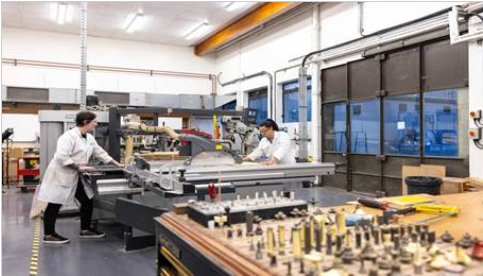
Participants will translate conceptual design ideas into physical prototypes within a dedicated prototyping space equipped with state-of-the-art machinery and technologies. The ACE Workshop of the Dyson School of Design Engineering provides full access to mechanical, electronic and digital manufacturing equipment, wood and metal fabrication labs, plus on-site technical demonstrations and tutor support. Guided conceptual design and rapid prototyping sessions will transform creative ideas into tangible artefacts.
On the final day of the Winter School, student teams will deliver presentations on integrated design, innovation and entrepreneurship projects.
2. Learning Outcomes Upon Completion
A. Master core innovation methodologies and creative thinking techniques to support future academic study and professional careers
B. Develop design thinking strategies to generate original concepts and address global challenges
C. Gain insight into cutting-edge human factors research in design, covering creative design deployment across industries and human-system interaction
D. Acquire frameworks for academic research, knowledge translation from concepts to design solutions, and recognise the value of future-oriented design
E. Comprehend the practical value of design in AI-augmented audio design, gamified innovation and related fields
F. Understand diverse leadership styles and develop strategies to cultivate leadership as emerging innovators
G. Gain supervised hands-on experience translating conceptual designs into functional prototypes ready for detailed iterative development
H. Fully experience the complete innovation design pipeline from conceptualisation to rapid prototyping within collaborative teams tackling defined challenges
I. Build robust communication and presentation capabilities for design thinking and practical project delivery
J. Learn from real-world insights shared by distinguished entrepreneurs, including key industry opportunities and challenges
3. Teaching Methodology
The programme comprises a total of 60 contact hours delivered via diverse active learning tools:
A. In-person lectures and Q&A sessions to maximise learning outcomes and engagement
B. Interactive practical exercises with formative feedback provision
C. Team-based creative ideation, prototyping and presentation projects
D. Case studies and group discussions to strengthen conceptual analysis and real-world problem-solving capacity
E. Tutor-supervised group prototyping practice
4. Teaching Team
The Design Engineering for Innovation Winter School is taught by a multidisciplinary academic team from the Dyson School of Design Engineering, Imperial College London.
5. Certification
All participants who successfully complete the programme will receive an official certificate of attendance issued by Imperial College London, together with an individual project transcript. Awards will be presented to the outstanding project team.
6. Eligibility & Entry Requirements
This Winter School targets undergraduate and postgraduate students in their final two years of degree study, preferably majoring in engineering or holding a strong interest in design engineering.
A. Applicants shall maintain satisfactory academic performance in their current year of study
B. All participants must have reached the age of 18 before the programme commencement date
C. Applicants must demonstrate proficient English language proficiency. Non-native English speakers shall meet one of the following standards:
IELTS Academic: Overall band 6.5, minimum 6.0 in each sub-test
TOEFL iBT: Overall score 92, minimum 20 in each section
CET-4 (China): Minimum score 550
CET-6 (China): Minimum score 520
7. Programme Venue Details
All Winter School sessions will take place at Imperial College London, South Kensington Campus, address:
Dyson School of Design Engineering
Imperial College London
25 Exhibition Road
South Kensington
London SW7 2DB, United Kingdom
South Kensington sits at the heart of “Albertopolis”, Prince Albert’s visionary district integrating science and arts, surrounded by world-famous cultural institutions including the Science Museum, Natural History Museum and the Victoria and Albert Museum.
8. Programme Fee (Including Accommodation): £5,400 per person
Fee Inclusions:
Ten days of tuition from 9:30 to 16:30 daily for two weeks
Thirteen nights of on-campus accommodation
Daily lunch during teaching periods
Official completion certificate
Individual project transcript
Full administrative support from programme coordinators
Fee Exclusions:
International airfare
Visa application fees
Travel insurance
All evening meals
Weekend catering costs
Local transportation expenses within London
9. Airport Transfer Service
Transfer service can be arranged upon request at an additional cost of £100 – £150 per single trip, borne by participants.
10. Application Procedures
Complete the official application form→Application review and admission notification → Full programme fee payment → Official invitation letter issuance for visa application → Submit flight booking information to programme coordinators → Visa acquisition
11. Application Form Link: shturl.cc/ws6RQe16zmMacvJ2fV7VDE5