
版权所有©2022西安交大米兰理工联合学院
Contact:iHarbour,Xi'an,Shaanxi,710049,P.R.China Tel:0089-29-88960094
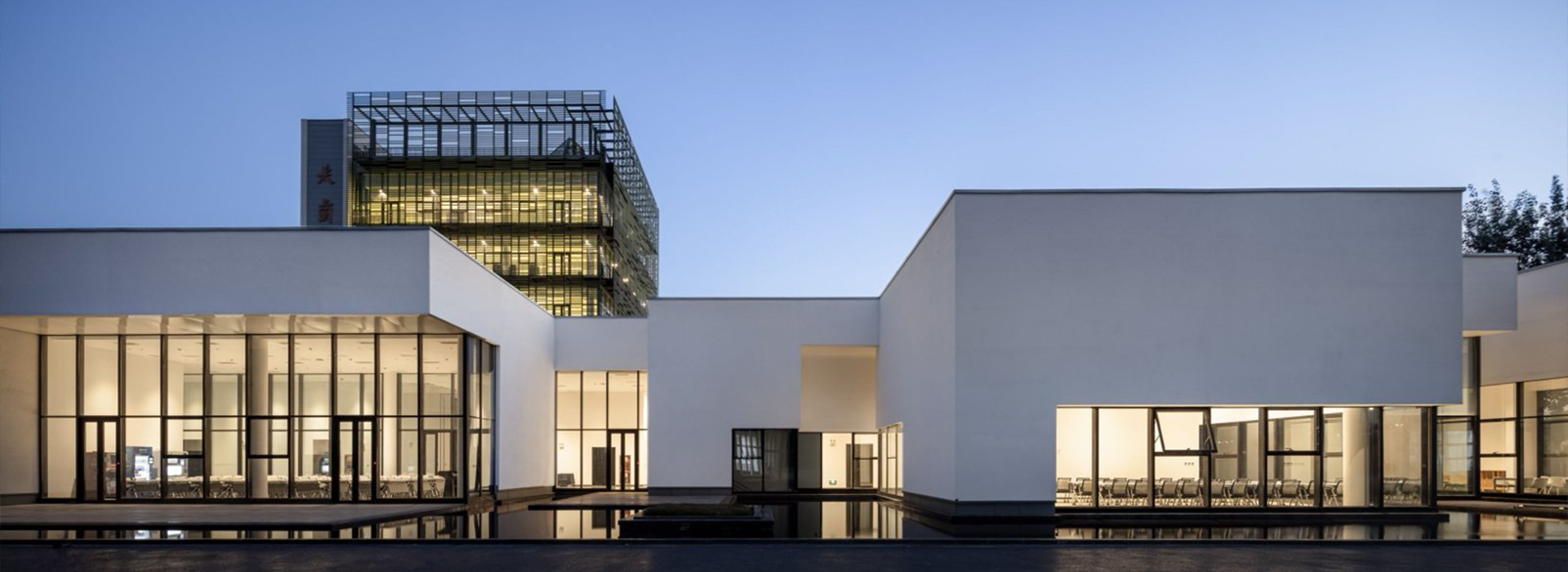
Architecture is a discipline that explores buildings and their contexts, and it integrates science with art as well as engineering with humanities. The Architecture program at Xi’an Jiaotong University, established in 1986, passed the National Undergraduate Education Evaluation for Architecture for the first time in 2007. It was recognized as a Characteristic Specialty of Shaanxi Province in 2008 and selected as a National First-class Undergraduate Program Construction Site in 2021. After nearly four decades of development, the program has cultivated a distinctive talent training model featuring a high starting point, solid foundation, strict requirements, emphasis on practice, and pursuit of innovation.
In response to national strategies such as the high-quality development of the Belt and Road Initiative, new-type urbanization and urban renewal, self-reliance in science and technology, cultural confidence, high-level opening-up, and educational innovation, the program also aligns with the global trend of disciplinary integration and sustainable development in architecture. By deeply combining Xi’an Jiaotong University’s solid engineering foundation with Politecnico di Milano’s international leading strengths in architectural design, historical heritage conservation, and building technology, it establishes an international and integrated architectural education system. The program aims to nurture versatile, innovative, and globally competitive architectural professionals who possess humanistic literacy, international vision, and cross-cultural leadership, who can tackle complex challenges in future urban and rural development, and who are well-versed in international norms.
Graduates of this program will demonstrate first-class moral conduct and embrace the core values of “Diligence, Sincerity, Perseverance, and Tolerance”. They will be equipped with broad international vision, profound humanistic and artistic accomplishment, a strong sense of social responsibility, and a sustainable development philosophy. With a solid grasp of comprehensive basic theories and systematic professional knowledge in architecture, they will develop outstanding capabilities in innovative architectural design and engineering practice. They will be qualified for design, research, consulting, development, and management work in architectural design, urban design, heritage conservation, building technology, and related fields, and will integrate social, cultural, environmental, technical, and economic factors to creatively resolve complex architectural and urban problems.
Through four years of continuous learning and professional practice after graduation, graduates will attain the following abilities:
Objective 1: A sound foundation in basic architectural theories as well as natural sciences, humanities, and arts is guaranteed. Key historical facts in architectural history are mastered, and fundamental theories and knowledge of architecture are fully understood. Competence is also achieved in basic theories of building materials and construction, structures, building services, and physical environment control, together with the general procedures and methods of architectural design, all of which can be comprehensively applied in architectural creation and engineering design.
Objective 2: Exceptional innovative capacity in architectural design and comprehensive problem-solving skills will be formed. Technical factors can be effectively coordinated with non-technical dimensions including humanity, environment, society, and regulations, supporting the completion of the entire architectural design process from conceptualization to implementation.
Objective 3: A broad international perspective enables effective cross-cultural communication, exchange, and cooperation. Work can be carried out efficiently both individually and as part of a team within multicultural environments.
Objective 4: Sound moral and professional standards are maintained, together with a clear understanding of laws, regulations, policies, and standards governing the architectural industry. A strong sense of social responsibility, cultural inheritance awareness, and a sustainable development mindset are deeply rooted.
Objective 5: Critical thinking, independent learning, and lifelong inquiry capabilities are cultivated. Cutting-edge progress in architecture and related disciplines can be continuously tracked to support sustained self-improvement.
Graduates majoring in Architecture shall satisfy the following graduation requirements:
A thorough comprehension of Xi Jinping Thought on Socialism with Chinese Characteristics for a New Era is achieved, along with a firm grasp of its worldview and methodology. The new development philosophy featuring innovation, coordination, green development, openness, and sharing is fully embraced. Firm ideals, patriotism, legal awareness, and a strong sense of social responsibility are all present.
Basic principles and relevant knowledge of architectural design are mastered. Familiarity is developed with knowledge in humanities and social sciences, natural sciences, and related disciplines, which can be comprehensively utilized to address complex architectural design problems.
· Indicator B.1: Key historical facts of architectural history are mastered, and basic theories and knowledge of architecture are well understood.
· Indicator B.2: Fundamental theories of building materials and construction, architectural structures, building services, and architectural physical environment control are acquired.
· Indicator B.3: The general procedures and methods of architectural design are fully grasped.
Scientific tools and techniques for problem analysis are mastered. Through literature research and engineering practice, complex architectural issues can be identified and evaluated, leading to valid and practical conclusions.
· Indicator C.1: The impacts of function, technology, art, economy, environment, and other factors on architecture, as well as their dialectical relationships, are clearly understood.
· Indicator C.2: Practical research methods including field investigation and public participation are applied, allowing the formulation of design goals and requirements based on research and data collection.
· Indicator C.3: Scientific analytical tools are employed to examine complex architectural problems and derive effective solutions.
Procedures and methods of architectural design are mastered, and relevant technical knowledge and principles are well understood. Creative and integrated solutions can be developed for complex architectural challenges, with full consideration of social, health, safety, legal, cultural, and environmental factors.
· Indicator D.1: Principles of architectural function, basic aesthetic rules, and environmental coordination strategies are mastered, supporting proficient development of architectural schematic designs.
· Indicator D.2: Basic principles for heritage conservation and adaptive reuse of existing buildings are understood, enabling building surveys, mapping, and preliminary conservation or renovation design.
· Indicator D.3: Theories of urban planning, urban design, and landscape architecture are applied, and core principles are effectively used in practical design work.
· Indicator D.4: Energy-saving measures and relevant codes are implemented, and design approaches for energy-efficient and green buildings are fully understood.
Basic scientific principles and research methods of architecture are mastered. Awareness is maintained of cutting-edge theories and technologies in the field. An open vision, independent thinking, and critical spirit enable systematic research into complex architectural engineering problems through investigation, simulation, and comprehensive design, yielding reasonable and effective results. Cross-disciplinary cooperation and integration are also achievable.
· Indicator E.1: Social, historical, cultural, and theoretical foundations related to architecture are firmly established.
· Indicator E.2: An open mindset is maintained, together with independent and creative thinking and critical awareness.
· Indicator E.3: Various factors influencing architectural schemes are comprehensively analyzed, and design alternatives are reasonably compared, adjusted, and selected.
· Indicator E.4: Laboratory-based design research methods are learned and applied.
· Indicator E.5: Capabilities for cross-disciplinary cooperation are formed, laying a solid foundation for advanced academic studies.
Professional design software and modern technologies are proficiently used. Appropriate tools and resources are selected rationally to support design, simulation, and prediction for complex engineering problems, with a clear understanding of their limitations.
· Indicator F.1: Essential design and graphic software is used to complete drawing production, documentation, process analysis, and architectural expression.
· Indicator F.2: Advanced technologies including data analysis and artificial intelligence are applied, providing basic capabilities in simulation, prediction, and evaluation.
Comprehensive analysis and evaluation of engineering contexts are performed. The social, health, safety, legal, and cultural impacts of architectural design schemes are carefully assessed, and corresponding professional responsibilities are clearly recognized.
· Indicator G.1: Building safety requirements are understood, and professional knowledge is used to evaluate the wider impacts of design proposals.
· Indicator G.2: The social responsibilities of architectural professionals are fully acknowledged and upheld.
A strong commitment to green and sustainable development is formed. The impacts of architectural practice on the ecological environment and social sustainability are understood and properly evaluated.
· Indicator H.1: Environmental protection and sustainable development are prioritized, with basic competence in green building evaluation.
· Indicator H.2: Sustainable design concepts are applied, and principles of resource conservation in land, energy, and materials are followed.
Humanistic literacy and social responsibility are emphasized. Correct values and sound judgment guide professional practice, ensuring compliance with ethical and professional standards.
A strong sense of teamwork and responsibility is developed. Roles as individual contributors, team members, and leaders can be effectively performed in multidisciplinary settings.
Effective communication and expression skills are cultivated. Design intentions can be clearly conveyed through language, text, drawings, and models. Professional dialogue is possible with industry peers, the public, and international partners across cultural boundaries.
· Indicator K.1: Multiple forms of architectural expression including text, drawing, and modeling are mastered.
· Indicator K.2: Design ideas are articulated clearly in both written and oral forms for effective professional and public communication.
· Indicator K.3: An international outlook and strong language skills support smooth cross-cultural professional exchange.
Basic principles of project management and economic decision-making are understood. Relevant laws and regulations are followed, and knowledge is applied appropriately in architectural and interdisciplinary practice.
Adaptability and continuous learning abilities are strengthened. Knowledge is updated and expanded through independent study, and a lifelong learning mindset is established.
Core Discipline:
Architecture
Related Disciplines:
Urban and Rural Planning
Landscape Architecture
Civil Engineering,
Computer Science and Technology
History
Duration of Study: 4 years
Degrees Conferred:
Bachelor of Engineering (Architecture), Xi’an Jiaotong University
Laurea in Progettazione dell'Architettura, Politecnico di Milano
Graduation Requirements: Students who complete 156 credits as required by the professional training program and 8 credits of extracurricular practice, including no fewer than 2 credits in innovation and entrepreneurship courses, 2 credits in aesthetic education, and 32 class hours of labor education, shall be granted graduation upon passing military training assessment and meeting all requirements specified in the relevant implementation rules of Xi’an Jiaotong University covering labor education, college English, physical education, innovation and entrepreneurship, and general education. Those who meet the provisions of the Regulations on Undergraduate Academic Management and Degree Conferral of Xi’an Jiaotong University shall be awarded the Bachelor of Engineering degree by Xi’an Jiaotong University.
In addition, students who satisfy the undergraduate degree requirements of Politecnico di Milano, including the Key Educational Objectives for Italian Architecture Majors (translated in Appendix 6) and the Teaching Requirements for the Architecture Degree at Politecnico di Milano (translated in Appendix 7), shall be granted the Laurea in Progettazione dell'Architettura.
This training program integrates the graduation and degree requirements of both Chinese and Italian institutions. Students who fully complete the program in accordance with its provisions will be awarded the Bachelor of Engineering degree by Xi’an Jiaotong University, the Laurea in Progettazione dell'Architettura by Politecnico di Milano, and the undergraduate graduation certificate of Xi’an Jiaotong University.
Friendship Link :
西安交通大学