
版权所有©2022西安交大米兰理工联合学院
Contact:iHarbour,Xi'an,Shaanxi,710049,P.R.China Tel:0089-29-88960094

1. Industry Overview and Future Prospects
Against the backdrop of climate change and environmental crises, and in response to China’s national strategic agenda for achieving the carbon peaking and carbon neutrality goals and building a new-type power system, demand for professionals in the power and energy sector remains strong, while the capabilities expected of such professionals are also undergoing profound changes. Since the 13th Five-Year Plan period, the proportion of highly skilled personnel in the power sector has generally followed an upward, albeit fluctuating, trend, and power enterprises have shown steadily increasing demand for graduates with bachelor’s and master’s degrees. As new technologies for the development and utilization of power and energy—such as the Energy Internet, energy storage, and integrated energy systems—continue to emerge, practitioners must not only master traditional electrical engineering knowledge grounded in electromagnetics, but also possess knowledge and skills in communications, energy, materials, and related fields. This development places higher demands on interdisciplinary knowledge and the ability to integrate and apply it in complex systems. Moreover, climate change and the energy transition are common challenges facing all humankind and require countries to work together. This is an important dimension of building a community with a shared future for mankind and requires programs in Electrical Engineering and Automation to cultivate outstanding, globally competent engineering professionals with an international perspective and strong communication and collaboration capabilities.
Electrical Engineering and Automation is a traditional engineering discipline that generally encompasses power electronics, computer technology, electrical machines and apparatus, information and networked control technologies, mechatronics, and many other fields. It is a highly interdisciplinary field characterized by the integration of high- and low-voltage technologies, electrical and mechanical systems, and software and hardware. The program prepares advanced engineering professionals who possess a solid foundation in engineering and technology together with specialized knowledge of electrical engineering; have received fundamental training in electrical and electronic engineering, systems and control, and computer technology; and are capable of analyzing and solving technical and control problems in electrical engineering.
At present, power grid companies, power equipment manufacturers, relevant government departments, and universities have an urgent need for interdisciplinary and outstanding engineering professionals in Electrical Engineering and Automation. For example, State Grid Corporation of China, a large central state-owned enterprise that has ranked as high as No. 2 on the Fortune Global 500, recruits tens of thousands of new graduates every year and has stated that graduates in electrical engineering have made important contributions to corporate management, scientific and technological innovation, production, and operations, achieving shared growth with the enterprise. In 2023, State Grid Shaanxi Electric Power Co., Ltd. recruited 927 graduates from electrical engineering-related majors in its first recruitment batch and 223 in its second batch, for a total of 1,150. State Grid Shandong Electric Power Company recruits more than 1,300 graduates annually. In addition, both the quality of incoming students and the scale of undergraduate education in Electrical Engineering and Automation have shown a clear upward trend nationwide, while postgraduate enrollment in Electrical Engineering has continued to expand. Among universities whose Electrical Engineering disciplines were rated A+ in China’s national disciplinary assessment, Xi’an Jiaotong University, Tsinghua University, and Huazhong University of Science and Technology collectively enroll more than 1,000 master’s students each year, reflecting the urgent demand for professionals in the field.
2. History and Overall Strength of the Program
The Electrical Engineering and Automation program at Xi’an Jiaotong University was founded in 1908 and is recognized as one of the birthplaces of higher education in electrical engineering in China. It is a National First-Class Undergraduate Major and is supported by Xi’an Jiaotong University’s A+ discipline in Electrical Engineering, which ranks among the top 0.01% globally in the Essential Science Indicators (ESI). The program has access to high-level talent-development platforms, including the State Key Laboratory of Electrical Insulation and Power Equipment and the National Experimental Teaching Demonstration Center for Electrical and Electronic Engineering. It is one of China’s leading electrical engineering programs in terms of disciplinary strength, faculty, educational resources, and talent development. Upholding the longstanding tradition of “a high starting point, solid foundations, rigorous standards, and strong practical training,” the program consistently responds to national demand for professionals in power and energy development, follows the “Electrical Engineering Plus” educational philosophy, vigorously advances the integration of industry and education and the integration of science and education, and continues to explore and lead world-class undergraduate education in electrical engineering with Chinese characteristics. It has educated a large number of outstanding leaders in the field of electrical engineering.
Politecnico di Milano is a strategic partner of Xi’an Jiaotong University, and the two universities have established a strong foundation for cooperation in talent development and disciplinary advancement. Since 2009, they have signed 20 cooperation agreements covering inter-university collaboration—including Sino-foreign cooperative education programs—joint student education, and faculty and student exchanges. Participating schools and academic units have included Electrical Engineering, Electronic and Information Engineering, Mechanical Engineering, Human Settlements, Aerospace Engineering, Energy and Power Engineering, Humanities and Social Sciences, and Management. The “reciprocal exchange and jointly organized cohort” model jointly developed by the School of Electrical Engineering at Xi’an Jiaotong University and the School of Industrial and Information Engineering at Politecnico di Milano has produced a strong demonstration effect. More than 200 students have participated in joint dual-degree master’s and doctoral programs between the two universities and have received degrees from both institutions.
Xi’an Jiaotong University and Politecnico di Milano both possess excellent educational conditions, a deep foundation for cooperation, a strong shared commitment, and highly complementary strengths. Their collaboration aligns with major national strategies, including the cultivation of outstanding engineers, the carbon peaking and carbon neutrality goals, and the Belt and Road Initiative. The cooperative program fully leverages Xi’an Jiaotong University’s longstanding strengths and comprehensive disciplinary coverage in Electrical Engineering, together with Politecnico di Milano’s internationally leading expertise and interdisciplinary experience in materials, measurement science, chemical engineering, environmental science, and related fields. By introducing high-quality international educational resources, the two universities have established a world-class platform for international cooperation, exchange, and talent development. On this basis, they offer the Electrical Engineering and Automation (Sino-Foreign Cooperative Education) program to cultivate interdisciplinary, internationally oriented, and outstanding electrical engineering professionals for the new era.
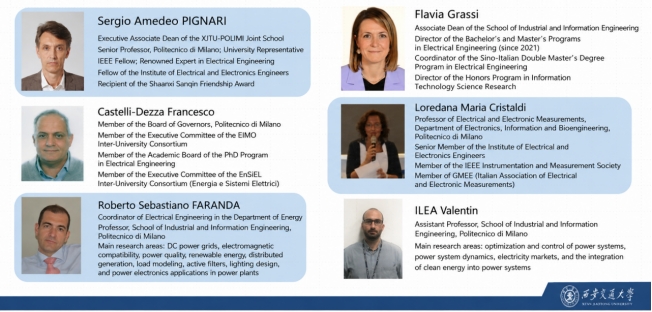
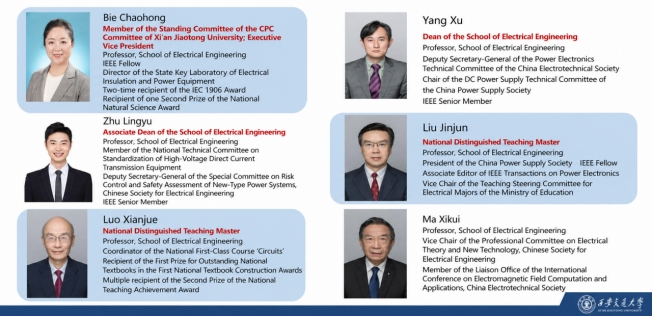
Faculty members are jointly selected and appointed by the Chinese and Italian partner universities, and distinguished scholars from China and abroad are invited to form an Academic Committee. Drawing on Xi’an Jiaotong University’s strengths in Electrical Engineering, Mechanical Engineering, Mathematics, Physics, and other disciplines, the School appoints outstanding scholars from within and outside the University as faculty members. Politecnico di Milano assigns experienced professional faculty members and teams of doctoral teaching assistants to deliver more than one-third of the core courses. Together, the two universities provide more than 30 faculty members to support teaching and research activities.
Achieving carbon peaking and carbon neutrality is a major strategic decision made by the CPC Central Committee with Comrade Xi Jinping at its core to address the increasingly prominent constraints imposed by resources and the environment. As an important pathway toward achieving the dual carbon goals, the construction of a new-type power system aims to create a new form of power system that is clean and low-carbon, secure and controllable, flexible and efficient, intelligent and user-friendly, and open and interactive. It represents a primary arena for innovation in advanced energy and has become an important entry point for disciplinary development, scientific and technological innovation, and high-level talent cultivation in Electrical Engineering. In response to the dual carbon goals and the needs of new-type power system development, the Electrical Engineering and Automation program (Sino-Foreign Cooperative Education) will further strengthen multidisciplinary collaboration between the two universities, fully leverage their respective strengths in Electrical Engineering, and use interdisciplinary integration to address key bottlenecks in the development of China’s power and energy sector. In doing so, it will contribute to building a world-class discipline in Electrical Engineering with international influence and cultivate outstanding and innovative electrical engineering professionals with a global perspective.
Electrical Engineering is a key discipline for addressing resource and environmental constraints, developing a new-type power system, and serving China’s national dual carbon strategy. It has become an important component of innovation-driven development in China and a major entry point for innovative breakthroughs at comprehensive universities. The program is distinguished by the integration of complementary Chinese and international disciplinary strengths, the integration of information and physical systems, the combination of materials and environmental science, and the coordination of equipment and systems. Students receive fundamental knowledge and skills training in principles of electrical engineering, automatic control, energy conversion and storage, Internet technologies, power engineering materials and equipment, engineering management, and related fields. This prepares them to address complex engineering problems in electrical engineering under the carbon-neutrality goal, including equipment design and manufacturing, system analysis, and operational control.
The program is designed to involve a broader range of engineering-related disciplines and, under the guidance of the Belt and Road Initiative, to comprehensively promote interdisciplinary integration and academic exchange across different fields. Through an open and collaborative international platform, the two universities complement each other’s strengths and pursue mutual benefit, creating new opportunities for disciplinary development at both institutions and for the implementation of national strategies. By introducing high-quality international educational resources, deepening reform, optimizing management, innovating talent-development models, and highlighting interdisciplinary integration, the program maintains close alignment with industrial development, social needs, and the frontiers of science and technology, while advancing the development of world-class disciplines. The University continues to expand the breadth and depth of international cooperation and exchange, broaden the space for professional development, allocate educational resources effectively, and promote greater openness, exchange, and integration in education. These efforts enhance the quality of innovative international talent development and better support China’s strategy for opening up education in the new era.
The curriculum is centered on the goal of cultivating interdisciplinary, internationally oriented, and outstanding electrical engineering professionals. It draws on the disciplinary strengths of Xi’an Jiaotong University and Politecnico di Milano to create a forward-looking curriculum that promotes interdisciplinarity, integrates frontier developments, and evolves with the times. By combining the strengths of the faculty teams from both universities, the program builds a high-level professional teaching team. High-standard experimental content and carefully planned laboratory development demonstrate the quality and effectiveness of practice-oriented education. By introducing industrial resources and research needs into teaching, the program further improves both curriculum-based and practice-based education and strengthens the integration of industry and education.
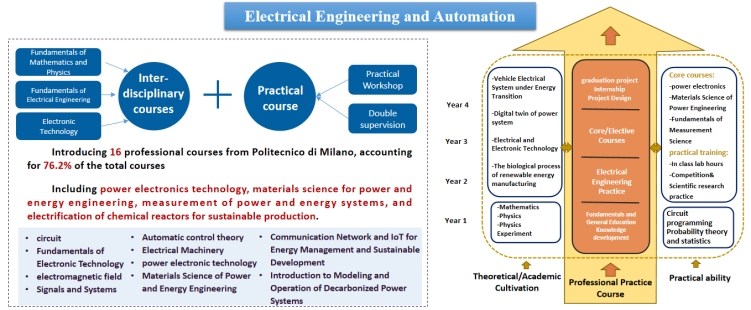
The program’s educational platforms include first-class teaching and research facilities such as the National Key Laboratory of Electrical Materials and Electrical Insulation and Xi’an Jiaotong University’s National Experimental Teaching Demonstration Center for Electrical and Electronic Engineering. It also benefits from 20 university-based joint research institutes established with organizations such as State Grid, China Huaneng Group, China Southern Power Grid, TBEA, NARI Group, and CHINT, as well as dozens of international practice bases integrating industry and education. Through interdisciplinary coursework, Sino-foreign cooperation in industry-education integration, and classroom-based design and engineering practice using real enterprise projects, the program provides students with a high-quality, full-chain educational platform covering in-class experiments, extracurricular practice, competition-based training, and hands-on research.
Q: What does Electrical Engineering and Automation study?
Electrical Engineering and Automation is a comprehensive engineering discipline centered on the generation, transmission, distribution, utilization, and automated control of electrical energy, while integrating technologies such as power electronics, computing, and information processing. It studies the fundamental theories, specialized technologies, and practical innovation methods related to the generation, transmission, conversion, control, storage, and utilization of electrical energy. The field encompasses circuit theory, electromagnetic field theory, electronic technology, automatic control technology, and many other areas, making it a highly interdisciplinary program.
Q: What qualities and abilities are helpful for students in Electrical Engineering and Automation? Is this program right for me?
We believe that students who are strong in mathematics and physics, diligent in hands-on work, clear in logical thinking, and willing to explore problems in depth are well suited to Electrical Engineering and Automation. The program is especially appropriate for students who have a strong interest in the power industry, intelligent manufacturing, new energy, or applications of artificial intelligence, and who remain sensitive to new developments and enthusiastic about continuous exploration.
Q: What are the core courses in Electrical Engineering and Automation?
Innovative professionals in Electrical Engineering and Automation should possess a solid foundation in mathematics and the natural sciences, together with fundamental knowledge of electrical engineering. Core foundational courses in the discipline include Circuit Theory, Fundamentals of Electronic Technology, Electromagnetic Fields, Signals and Systems, Automatic Control Theory, Electrical Machines, and Power Electronics.
In addition, to address frontier developments in Electrical Engineering, the program works with Politecnico di Milano to offer a group of interdisciplinary, forward-looking, and up-to-date core courses. These include Materials for Electrical and Energy Engineering; Fundamentals of Measurement Science; Communication Networks and the Internet of Things for Energy Management and Sustainability; Power and Energy Networks, Utilization, and the Smart-Grid Energy Transition; and Introduction to Modeling and Operation of Decarbonized Power Systems.
Q: What are the distinctive educational features of the Electrical Engineering and Automation program?
Against the backdrop of climate change, environmental crises, and the goal of carbon-neutral development, the program develops students’ knowledge, technologies, and practical innovation capabilities related to the generation, transmission, conversion, control, storage, and utilization of electrical energy. It draws on disciplines including principles of electrical engineering, solid-state chemistry, energy technology, electronic information technology, economics, and management, and is therefore highly interdisciplinary. Its main features are the integration of complementary Chinese and international disciplinary strengths, information and physical systems, materials and environmental science, and equipment and systems.
The program upholds the longstanding tradition of “a high starting point, solid foundations, rigorous standards, and strong practical training.” It consistently responds to national demand for professionals in power and energy development, follows the “Electrical Engineering Plus” educational philosophy, vigorously advances the integration of industry and education and the integration of science and education, and continues to explore and lead world-class undergraduate education in Electrical Engineering with Chinese characteristics. Students receive fundamental knowledge and skills training in principles of electrical engineering, automatic control, energy conversion and storage, Internet technologies, power engineering materials and equipment, engineering management, and related fields, enabling them to address complex engineering problems under the carbon-neutrality goal, including equipment design and manufacturing, system analysis, and operational control.
Q: Where do graduates of Electrical Engineering and Automation work?
Electrical Engineering and Automation is a broad field in both scope and application. Its curriculum spans the full spectrum from low-current information and control systems to high-current power systems. Graduates may work in the power industry, contributing to the construction of a new-type power system centered on new energy and supporting the realization of the carbon peaking and carbon neutrality goals. They may also pursue careers in software, information technology, communications, and artificial intelligence. In recent years, many graduates of the School of Electrical Engineering have also relied on their solid foundations and strong comprehensive capabilities to take key or leading roles in strategically important national technical fields, while some have entered finance and investment. Ultimately, one’s major is not the single most important factor determining future employment. Learning alongside outstanding peers and continually improving one’s abilities are what make genuine freedom of career choice possible.
Q: How does the Electrical Engineering and Automation program at the XJTU-POLIMI Joint School differ from the corresponding program in Xi’an Jiaotong University’s School of Electrical Engineering and from programs at other Project 985 universities? What are its advantages?
The program is characterized by “New Engineering plus Internationalization.” It brings together a world-class domestic discipline and internationally leading disciplinary strengths, introduces frontier international courses, and develops world-class educational facilities at the Western China Science and Technology Innovation Harbour. Its central goal is to cultivate outstanding and innovative Electrical Engineering professionals with a global perspective and to prepare them to become future global leaders in the power and energy field. Its educational positioning and training model therefore differ significantly from those of existing programs. Its principal advantage lies in creating a wider range of possibilities for students.
Q: What kinds of growth and training can I gain from studying this program?
Studying in this program enables students to deepen their knowledge of Electrical Engineering, strengthen their ability to solve complex real-world engineering problems involving system operation and equipment design, develop innovative thinking, broaden their international perspective, and cultivate a strong sense of responsibility to the country and society. In this way, students can achieve comprehensive growth and development.
Q: What is the most difficult part of studying this program, and what is the most attractive part?
The program covers a very broad range of knowledge while also requiring students to investigate important topics in depth. Balancing breadth and depth is therefore its principal challenge, and success requires sustained curiosity and enthusiasm. Its appeal lies in the sense of achievement that comes from solving real professional problems connected with everyday experience—and in the possibility that such solutions may become new approaches and new drivers for global sustainable development.
Q: Does the Electrical Engineering and Automation program offer international cooperation projects or exchange opportunities?
Yes, it offers many such opportunities. The Electrical Engineering disciplines at Xi’an Jiaotong University and Politecnico di Milano both enjoy considerable international influence and include internationally renowned scholars, among them a number of IEEE Fellows. The two universities have also achieved substantial results in research collaboration and joint talent development. International cooperation and exchange are therefore among the program’s major strengths.
Q: What are the development prospects for Electrical Engineering and Automation, and in which fields can I apply what I learn?
Electrical Engineering and Automation is a broad field in both scope and application. Graduates may work in the power industry and contribute to the construction of a new-type power system centered on new energy. They may also pursue careers in software, information technology, communications, and artificial intelligence, take key or leading roles in strategically important national technical fields, or enter finance and investment. All of these are active areas of development with broad future prospects.
Q: Which well-known professors teach Electrical Engineering and Automation at Xi’an Jiaotong University, and what roles will they play in my university experience?
The Electrical Engineering and Automation program at Xi’an Jiaotong University has many highly regarded and dedicated professors with interdisciplinary backgrounds. They play multiple roles in students’ university experience. As academic mentors, they help students establish solid professional foundations and broaden their understanding of frontier developments through rigorous teaching and research guidance. As guides to professional practice, they lead students in real projects and competitions, cultivating innovation and problem-solving abilities. They also serve as role models for career development, inspiring students through their academic achievements and professional influence. Some professors interact closely with students through laboratories or research groups, providing individualized support in academic exploration, career planning, and personal development and becoming important mentors throughout their university years.
Q: How should we view the opportunities in traditional power industries, such as power grids and power plants, and in emerging fields, such as new energy, smart grids, and electric vehicles? How can students respond to the development of the times?
Traditional power industries are themselves being transformed by continuously emerging technologies, including the Energy Internet and other technologies associated with new-type power systems. Emerging fields are expanding research activity and demand for professionals in Electrical Engineering, bringing further vitality to the discipline. Students should deepen their understanding of themselves, technological development, and society; make long-term career plans in light of technological trends and national strategies; master professional knowledge; and steadily build professional capabilities. By aligning personal development with the needs of the country, they can make greater contributions to national and social development.
Friendship Link :
西安交通大学